



Living in an urban apartment or rental flat often means enduring an unwanted daily soundtrack: muffled neighbor conversations through shared drywall, heavy footsteps vibrating through floorboards above, sirens echoing from the street, and elevator gears groaning through hallway walls. This constant sensory intrusion is more than a minor annoyance; continuous low-frequency environmental noise triggers chronic sympathetic nervous system arousal, elevating cortisol levels and degrading sleep architecture.
For renters, traditional structural soundproofing solutions—such as tearing down plaster to install resilient channel clips, double-layer drywall with green glue, or blowing dense cellulose insulation into wall cavities—are strictly forbidden by lease agreements. Fortunately, acoustic physics reveals that noise travels like water: it seeks the path of least resistance through microscopic air gaps and vibrates through un-decoupled solid surfaces. By deploying reversible, non-invasive acoustic isolation strategies, renters can slash ambient sound transmission by up to seventy percent. Below is your comprehensive renter-friendly acoustic blueprint.
1. Acoustic Physics: Airborne Sound vs. Structural Impact Noise
To successfully quiet a noisy rental apartment, you must first diagnose the exact physical mechanism of the incoming sound. Acoustic energy travels into your living space via two fundamentally distinct pathways:
- Airborne Noise: Sound waves traveling through atmospheric air—such as voices, barking dogs, television dialogue, and traffic rumble. Airborne noise penetrates directly through microscopic perimeter gaps around doors, unsealed windows, electrical outlet cutouts, and HVAC ductwork.
- Impact (Structure-Borne) Noise: Kinetic physical energy transferred directly into the building’s structural framework—such as heavy footsteps on timber subfloors above, slamming corridor doors, running laundry appliances, and dropped objects. Impact vibrations travel effortlessly through solid wooden joists and concrete slabs before radiating as acoustic sound waves into your ceiling.
According to building acoustics research from the National Research Council Canada (NRC), acoustic treatments must be tailored to transmission pathways. Applying thin acoustic foam pyramid panels to a wall does virtually nothing to stop incoming airborne street noise; lightweight foam merely dampens internal high-frequency room echoes. Stopping sound transmission requires air sealing, physical mass, and mechanical decoupling.
2. Perimeter Air Sealing: The 1% Gap Rule
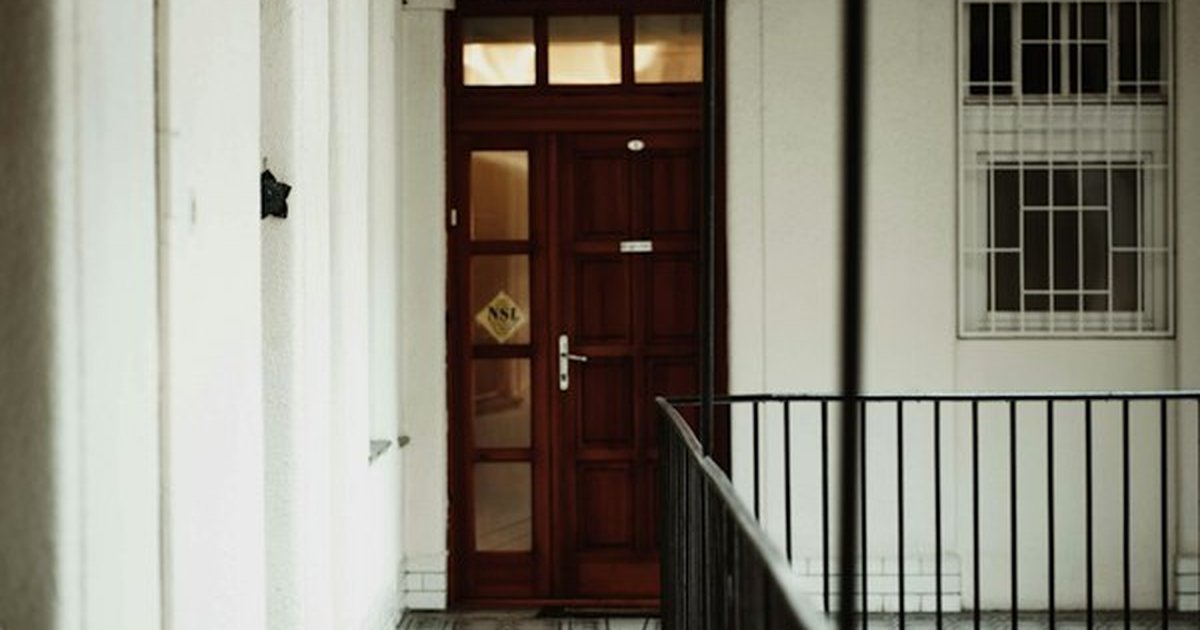
In acoustic engineering, there is a fundamental axiom known as the 1% Gap Rule: a mere one-percent physical gap or unsealed crack in a partition wall or door frame allows up to fifty percent of incoming airborne sound energy to leak straight through. The primary offender in almost every apartment is the hollow-core entry door leading to the shared hallway.
Most rental entry doors leave a half-inch to one-inch gap along the bottom threshold, acting as an open acoustic window for corridor footsteps, elevator dings, and neighbor conversations. You can seal this perimeter completely without violating your lease using non-permanent hardware:
- Heavy-Duty Neoprene Bottom Door Sweep: Install a slide-on or screw-clamp rubber bottom sweep that maintains continuous, airtight friction against the floor threshold when closed.
- Self-Adhesive Hollow Silicone Gaskets: Line the top and side door jambs with high-resilience hollow silicone bulb weatherstripping. When the door latches, the silicone compresses, forming an airtight acoustic gasket that eliminates perimeter air leaks.
- Electrical Outlet Acoustic Putty Pads: Remove decorative plastic outlet plates on shared party walls and press non-hardening, fire-rated acoustic putty into the cavity around the metal junction box to block sound flanking through hollow stud bays.

3. Window Damping and Reversible Mass-Loaded Barriers
Single-pane or poorly sealed double-pane windows represent the thinnest acoustic boundary in any residential building envelope. Street traffic rumble and siren sirens penetrate window glass easily due to low mass and acoustic resonance.
According to acoustic testing standards published by the Acoustical Society of America (ASA), improving the Sound Transmission Class (STC) of an existing window opening requires adding mass and damping. Renters can achieve dramatic noise reduction by hanging custom acoustic velvet drapery. True acoustic drapes are constructed with dense velvet face fabric (measuring at least 600 to 900 grams per square meter) backed by an internal core of high-density Mass-Loaded Vinyl (MLV) or heavy thermal dimout lining.
For extreme street noise, build removable magnetic interior acrylic storm inserts: 1/4-inch optical acrylic sheets edged with magnetic tape that seal flush against steel window frames. This creates a two-inch dead air gap that disrupts incoming sound pressure waves, cutting perceived exterior noise in half.

4. Decoupling Floors and Ceiling Footstep Attenuation
If you live underneath neighbors with heavy footsteps or uncarpeted hardwood floors, impact vibrations travel downward through ceiling joists. While you cannot alter your upstairs neighbor’s floor structure, you can prevent sound waves from bouncing around your own living quarters like an echo chamber.
Bare hardwood floors, blank drywall, and glass coffee tables create severe flutter echoes that amplify incoming noise. Cover at least sixty percent of your floor area with dense, high-pile wool rugs layered over 1/2-inch open-cell recycled rubber or dense felt acoustic carpet pads. The rubber underlayment acts as a mechanical dampener, absorbing impact vibrations from your own movements while softening sound reflections from above.
5. Renter Soundproofing Hardware and STC Performance Matrix
Compare the cost, noise reduction capability, and lease-friendly reversibility of primary non-structural acoustic interventions:
| Acoustic Intervention | Target Sound Type | Estimated STC Boost | Reversibility Rating | Primary Acoustic Mechanism |
|---|---|---|---|---|
| Perimeter Door Silicone Gaskets & Sweep | Airborne hallway noise, voices, TV | +6 to +10 STC points | 100% Reversible (peel-off adhesive) | Eliminates 1% air gap flanking leakage |
| Heavy Mass-Loaded Velvet Drapes | Exterior street traffic, sirens | +4 to +7 STC points | 100% Reversible (standard curtain rod) | High surface mass dampens incoming sound pressure |
| Dense Felt Underlay + Wool Area Rug | Impact footstep vibration, floor bounce | +12 to +18 IIC (Impact Class) | Immediate movable item | Decouples kinetic energy, absorbs floor reflections |
| Floor-to-Ceiling Freestanding Bookcases | Airborne shared party wall chatter | +3 to +5 STC points | 100% Reversible (furniture) | Adds massive physical density and acoustic diffusion |
6. Creating a Peaceful, Harmonious Living Environment
A quiet home is the essential foundation for cognitive restoration and deep sleep. Combine these acoustic treatments with our nighttime wind-down practices in building a calming evening routine for restful sleep and mental clarity to establish an oasis of tranquility.
When positioning large acoustic dampeners such as fabric sofas and heavy bookcases against shared party walls, follow our spatial zoning rules in small-space living room layouts for flow and comfort. Finally, balance soundproofing curtains with natural light management from our guide to maximizing natural light in dim interior rooms to maintain a bright, serene living sanctuary.